Blog Post #5 Food Essay

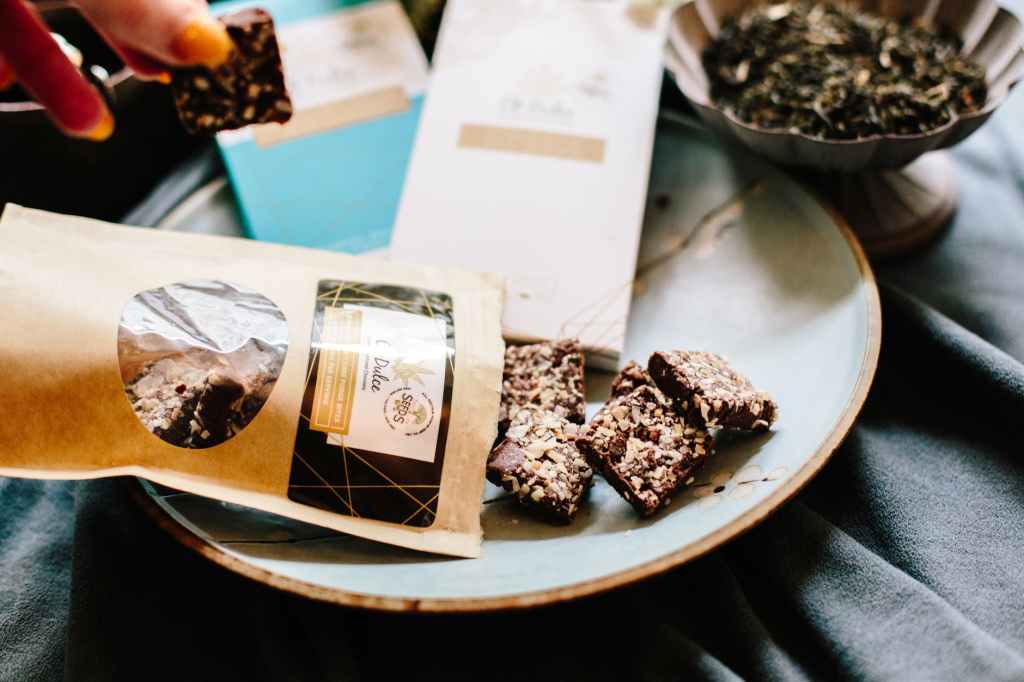
Photo by Tree of Life Seeds on Pexels.com

In my family, our tradition is to make fudge. It’s not some carefully crafted recipe from generations past; it comes off the back of a container of fluff that you could get at any supermarket, but somehow, it’s still ours. My mom told me once that I could only stir it over the stove clockwise, that if I stirred it the other way, it wouldn’t taste as good. I don’t believe this. I don’t think she did either, but that’s what her mom told her. My family is American. Well, we’re Polish and Irish and French Canadian and Russian and German and Scottish and maybe even a little Native American. But really, we’re American. I don’t know anything about my cultures. I mean, we eat pierogies on holidays and we make potatoes on St. Patrick’s Day, but that’s the extent of our celebration. But our fudge, that’s something we chose. That’s something we make.

My great uncle was able to claim dual citizenship in Ireland. My aunt helped him get it; she’s the genealogy whiz in our family, and she was able to trace back our lineage to prove that he was Irish enough. He’s an artist. He traveled there and studied the stone formations and when he came back, he presented to us all of the sketches and paintings and drawings from his trip. I wondered what I could discover about myself if I, too studied those stones.

In this essay, I want to explore my lack of culture through this American lens, but I also want to maybe tie in some of the information my aunt has found out about our family and incorporate it into my experiences with food.

Podcast Project: ARMY Wars: Episode 01: Fan Culture

https://drive.google.com/file/d/1PRbAVR-VSh4peX7LnGkHFmjU3bRDTFyg/view?usp=sharing

Here’s more information on all of the stuff we reference πŸ™‚ :

https://www.billboard.com/articles/news/bbma/7801216/bts-video-top-social-artist-win-billboard-music-awards-2017

https://www.newsweek.com/japanese-tv-show-cancels-k-pop-group-bts-whose-member-word-hugely-insulting-1208484

https://www.kpopstarz.com/articles/291812/20200304/twice-nayeon-s-stalker-threatens-her.htm

http://www.koreaherald.com/view.php?ud=20181019000634

https://www.newsweek.com/k-pop-rose-terminate-contract-j-star-payment-issue-lawsuit-1489664

http://en.koreaportal.com/articles/44716/20180426/bts-2018-update-jimin-tripped-j-hope-hurt-what-happened-at-the-airport-video.htm

Blog Post #4

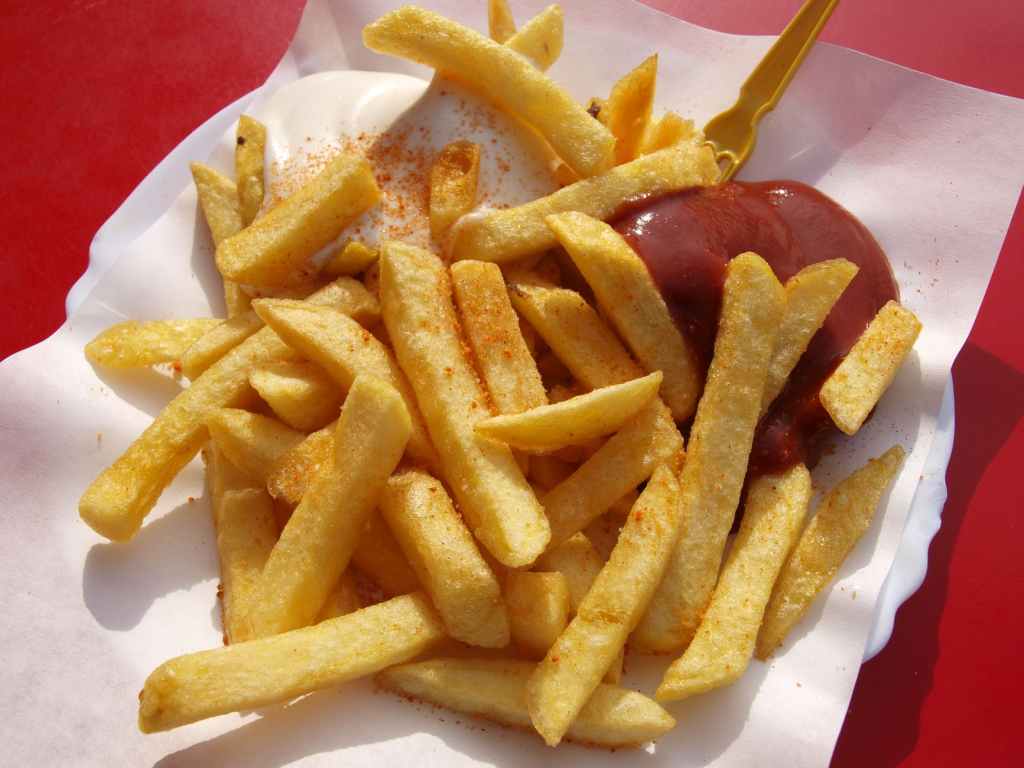
Photo by Marco Fischer on Pexels.com

Morgan Spurlock’s documentary Supersize Me is a film that’s been showing up in health education classes for years as a testament to why eating fast food is bad for you. Throughout the documentary, Spurlock makes himself the subject of an experiment, one that proves taxing to his body and to his drive. Food in this documentary begins as something that Spurlock enjoys, as we all do, but once he begins the process of ordering exclusively from the McDonald’s menu, food is then presented as an enemy, a threat. Several times throughout the film, Spurlock meets with doctors and dietitians to track his experiment, and they tell him to stop what he is doing and that it is killing his body. They beg him to at least stop drinking sodas with his meals, and he is forced to modify his experiment in order to keep himself from doing serious damage to his health.

Spurlock’s documentary seems to say a lot about America and about their need for convenience. He uses the chanting of “McDonald’s McDonald’s, Kentucky Fried Chicken and a Pizza Hut” at the very beginning of his documentary to show how from an incredibly young age, children are brainwashed into having this sense of brand loyalty and associate fast food with things that are fun and entertaining so that this food then becomes associated with happiness.

Reader’s Choice

In Karen Palmer’s text The Reader Is the Protagonist, Palmer highlights the rather unbelievable arc her life has taken. She describes her experience having to pack up and leave her life in California to escape an abusive situation and find new roots in Boulder, Colorado. Palmer refers to this abrupt life change as “do-it-yourself witness protection” (Palmer 192). She, her new husband, and her daughters all had to completely change their identities and could not tell any of their friends or family where they were going or what had happened to them. Palmer later reveals that these drastic measures were taken because her ex-husband had begun stalking her and had kidnapped their youngest daughter. Throughout the text, Palmer explains how this history affects the ways in which her life can progress and not progress in this new space. She talks about interviewing for a company called Paladin Press and how she was afraid to interview because she was not sure what she would do if she were asked to give references. She also expresses her worry towards the fact that this publishing company chooses to publish information and guides on things such as how to disappear and how to kill someone and not get caught.

In each step of the process of assimilating to a new style of life, the reader is able to see Palmer’s discomfort, however it is perhaps most prevalent when she brings up the topic of reading. One of her daughters asks Palmer to read them all a bed-time story, to which Palmer replies “Reading to my children– that, I could manage,” indicating that even something as seemingly simple and mundane as sharing a bed-time story had become warped for her by her trauma (Palmer 193). This appears again when she interviews for Paladin as she experiences difficulty correcting the grammatical errors in the manuscript they hand her, saying to herself, “I really can’t read” (Palmer 196). Towards the end of the essay, she reveals to us that reading had always been something important to her, something that had gotten her through several other hardships in her life, but that after experiencing the trauma with her ex-husband, she has not picked up a book to read for herself since. Palmer’s essay describes the ways in which trauma can take form in unexpected ways and can affect the parts of one’s life that no one would think to put a trigger warning on.

Questions for the reader:

  1. In what ways does Palmer’s essay reflect the structure of a novel? (talk about her sense of character, the narrative structure she uses, her inclusion of factual detail to forward the plot of her story, the nonlinear timeline, etc.)
  2. In what other ways do we see Palmer’s trauma reflected in the narrative?
  3. Do you feel that the point of her essay was made apparent to the reader? What did she do well? What could she have done better? What was confusing? What worked?

The discussion continues on Christina’s blog here!

Blog Post #3

For my podcast assignment, I would like to explore what it is like to be a Kpop fan. I may specifically focus on the group BTS since theirs is the largest fandom within the Kpop community. I would like to address the culture of fans in how they are constantly attempting to break new records and participate in mass voting for awards shows. I want to explore the more stressful sides of being a fan ie. feeling like you have to keep up with all of the content always being release and feeling shamed by other fans if you are not up to date or not participating in streaming and voting towards fandom goals. I would also like to address the fan wars and blackmail tactics that are used in the Kpop community.

I think it would be an interesting topic to address because Kpop has risen in popularity, but there are still a lot of people in America who know little about the fanbase itself, often simply labeling fans as typical “teenage girls obsessed with a boyband.” I think if people were to see a bit more inside of what it’s like to be a fan, they would understand more about why we support the music and the artists in the way we do.

Blog Post #2

The following is a draft of my memoir as I have it right now. At the end, I have posted my thoughts after my peer review session with Benny.

______________________

His hands were working, a knife whittling away the skin of a potato. An open-air pan sizzled in the mid-summer heat, bringing with it the smell of freshly chopped onions. I sat on the edge of a dusty brown cooler, the only bench one could find in the rural hillside kitchen of West Virginia.

My grandfather had gone out to the garden that morning, taking me with him. He pointed, his fingers dappled with sun spots, cracked and hardened, baked under the Southern heat, to the pink star-shaped flowers as we passed them by, though I do not now recall their names. He revealed to me the beginnings of cucumbers hanging beneath broad, flat leaves and the still chartreuse tomatoes, bulbous on the vine. He grabbed from his garden, his hands tearing and breaking the herbs he needed, parsely, thyme, basil, and filled his fists with the green stalks, then mine. We walked, slowly drawing ourselves up the dirt road, back to the kitchen. He did not possess the same supple knees and boundless energy I did at eight. 

My father did not perceive the rolling landscape with the same roving curiosity that was present in my own wide blue eyes. His expression was one of boredom, and annoyance, as he waved his hand in the air, a white flag upon a skinny pole, to swat away the swarms of gnats that hung pregnant in the air like cumulonimbus clouds. He was more drawn to the persuasions of the leisurely swing bench and the crochet fields of the quaint bed and breakfast up the road. He panted in the heat, sweat pouring through the cotton of his t-shirt, obscuring the lettering that read “This shirt comes with built-in Intellisense.”

While my father was not fond of the space, my cousins were eager to explore every inch of dirt, their shoes caked in mud and the knees of their jeans stained from where they knelt on the ground, examining the rocks that littered the banks of the creek. We all went down to the water’s edge, having donned our bathing suits, mine a bubblegum pink and chocolate brown tankini, and listened to the words of my grandfather as he pushed a raft into the water. The raft itself was not one of the inflatable kinds you could buy at the supermarket, but one of his own making, crafted entirely from decommissioned lawn chairs and duct tape. He, in his commanding tone, explained the safety rules while placing two more lawn chairs (these to be used for their intended purpose) on top of the raft, not bothering to secure them to the platform. I kicked at the dirt with my flip flops while my brother ventured into the murky brown water, declaring himself the captain of the makeshift flotation device. My cousin, Mason, followed him, and soon after, Ryan did too. They looked like a row of ducklings as they set toward the raft.

I watched as each of them in turn climbed aboard and pushed the other off. There was something methodical and innocent about the way each boy had to make his dominance known. I again turned to my father who was pacing up and down the sides of the banks. I’d never seen him more out of his element, more miserable, but when he caught my eye, he smiled to me and asked me if I was enjoying myself. I was. But it hurt me that he wasn’t.

That night we decided to stay, choosing the wooded wilderness over the soft comforts of the Bed and Breakfast. My father and mother went back, so I stayed with my aunt. She, as her children ran around her, pretending to shoot each other with bb guns, nailed stakes into the ground to pitch our tent. She unfolded and constructed the temporary shelter, her hands nimble as she worked threading the poles through the loops in the tent fabric. Then, one by one, she laid out each of our sleeping bags. I remember laying down that night with my head planted firmly on a rock. I woke the next morning stiff.

My grandfather took us to the place in his garden where he was growing bamboo. The stalks reached high above our heads, knit so tightly together that the garden on the other side wasn’t visible. My grandfather had hollowed out a small cavity in the bamboo field. I thought about getting lost there.

When our Subaru Forester kicked up dust behind us as we left the dirt roads of Del Ray Heights behind us, I felt the tears form in my eyes for the fluffy gray and white kitten I was leaving behind. I did not weep for my family.

***

I sunk further into the couch cushions as my uncle paused the video on the T.V. I was busted up laughing, folding over myself. The whole living room was packed with people: some sitting on the floor, others on the marble outcrop of the fireplace, still more in chairs and on couches. My eyes scanned the room, taking in the faces. My Aunt Jen had stopped coming years ago. My Uncle Tim and his daughters didn’t show up anymore; he got into a fight with my aunt over Thanksgiving. My grandmother moved to Florida and had a stroke there; now she can’t travel for holidays. My Grandpa Tony passed away this past spring. My brother’s friend sat beside him, the two of them laughing to themselves about political jokes. On the floor sat Shaun where my father should be. My grandfather couldn’t make it up for Christmas this year.

As I sat there, watching that moment play out on screen, I remembered what it felt like for this space to feel whole. Maybe we were never whole. Families, like any other part of life’s cycle, are not stagnant. They grow and dwindle and morph into each other, and I can’t keep resenting the way things change.

_____________

After having a discussion about my memoir with Benny, I realized that there were some key details that I was leaving out and things I wanted to convey that I haven’t quite achieved yet. I realized in talking about this experience that I may also want to focus on the shift in my relationship with my grandfather. At the time when I was eight, I idolized him because I thought he was the most fun and interesting person I had ever met, but as I’ve gotten older and formulated my own opinions and viewpoints, I’ve found it much harder to get along with him. I feel that I want to expand on that feeling throughout the story and maybe include something in that vein, but I’m not sure if the overall memoir would become too muddled if I were to do this. I also feel that there are certain scenes I want to add or expand upon in order to make the narrative stronger. I think the content is there, I just need to work the feeling out of it more. The purpose, I think, still doesn’t come through as much in the first portion of the story as I want it to.
Blog Post #1

For my borrowed memoir, I want to focus on mortality. I chose to write about a vacation I took with my family when I was eight to go visit my grandfather in West Virginia. This was the last vacation we went on together as a whole family, aunts, uncles, cousins, siblings, and parents included. When I was eight, I wasn’t really thinking about the fact that this might be the last memory we all recorded together. I wasn’t thinking about how the people in my life were temporary. This essay will explore through my lens now the contrast between the carefree nature of youth and the more serious realities of aging.

I believe that this subject will appeal to other readers because family and loss are subjects that everyone experiences. I think that they are aspects of life that bring us closer together and foster a sense of community. I feel that through this memoir, I want to use details of imagery and specific moments in order to evoke a sense of innocence and longing as well as a sense of grief. I want to incorporate Lopate’s ideas of “character development in expressing your opinions, prejudices, half-baked ideas, etc.” because I feel that my memoir lends itself to having this view of myself (Lopate 43). As I am reflecting on a younger version of me, I am able to be aware of my own flaws and what I am still unable to see in that moment.

A Response to I Could Tell You Stories by Patricia Hampl

Patricia Hampl begins her essay with a vignette was to grab her reader’s attention, then to subvert their assumptions about the piece as a whole. As Hampl states on page 3 of her essay, the vignette “isn’t a story, just a moment, the beginning of what could perhaps become the story” (Hampl 24). This makes an interesting assertion about writing in response to memory. Memory is subject to change. In fact, the simple act of remembering an event changes the details. We are constantly influenced by our impressions and the world around us. She at first sets us in a scene that is so incredibly vivid that we can picture every detail, but she then goes back on her word, saying that instead the details she expressed so clearly in the first passage are in fact altered to be something else. It tells us something about truth and integrity of memory. These details for Hampl were altered because of her perception of events and the way that she wanted the scene to be viewed by her audience, therefore, she created a sort of “myth” (Hampl 26) to the memoir by exaggerating certain details or changing them in order to convey a more accurate feeling of the scene in order to evoke certain emotional responses from the reader.

She then ties this to the idea of the first draft. She compares it to meeting someone for the first time, that sometimes you don’t get all of the details or impressions right straight away. She also brings up the important point that we only store images of value to us, therefore, we can forget what is not relevant to this feeling of value.

Design a site like this with WordPress.com
Get started